Prabhakar Barwe
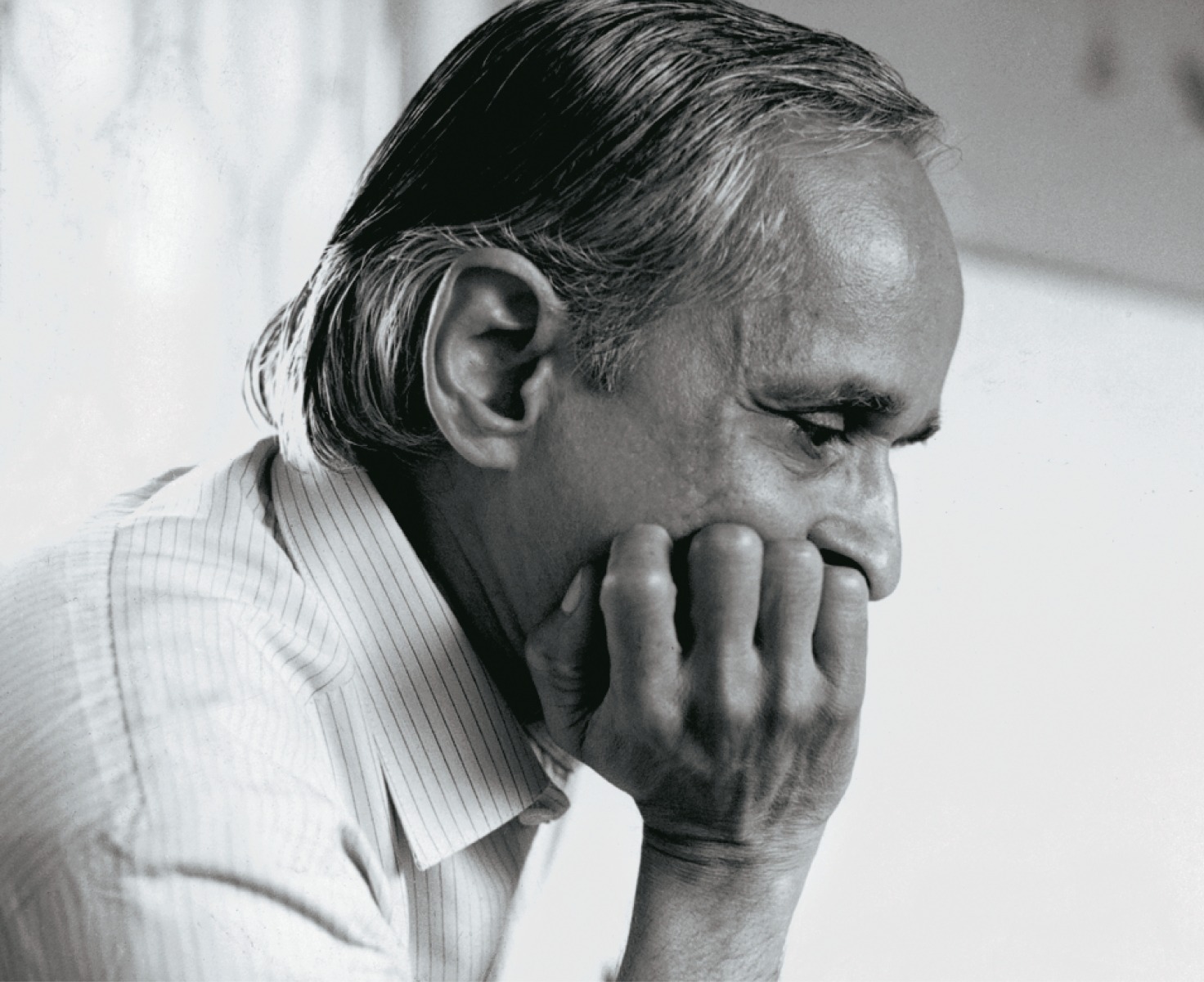
(1936 - 1995)
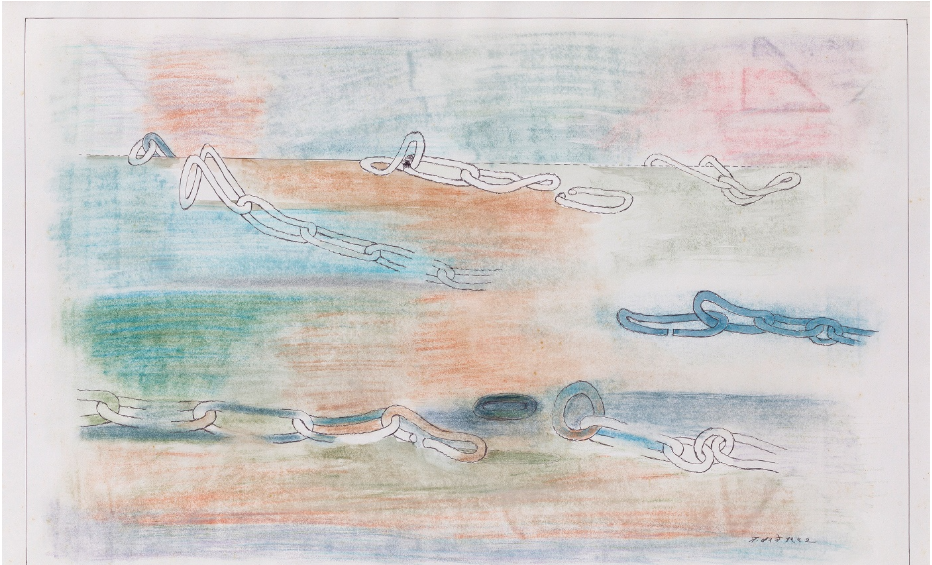
Prabhakar Barwe rejected both the British academic and the Indian miniature tradition, to evolve a universal, abstract visual language that explored inward spaces and transient realities. It reflected in his phallic forms of the 1970s, isolated heads of the ’80s, and the still pendulum clocks and abandoned staircases of the ’90s.
The grandnephew of the well-known sculptor V. P. Karmakar, and the son of an artist who worked in Bombay film studios, he was born on 16 March 1936 in Nagaon, Maharashtra. He joined Sir J. J. School of Art, Bombay, in 1954. He was inspired by the style of the Bauhaus painter Paul Klee, which reflected in his early watercolours and slightly later works with floating motifs on a transparent surface.
The tantric-oriented abstract format of his paintings was already set during his years at the Weavers’ Service Centre in Varanasi, which he had joined in 1961. At Varanasi, along with other leading painters like K. G. Subramanyan, Gautam Waghela, and Ambadas, Barwe worked closely with weavers on the development of modern Indian textile designs.
Equally at ease with the written word, Barwe published, in 1990, a collection of well-delineated writings on the creative process, titled Kora Canvas. He received the Academy of Fine Arts award, Calcutta, in 1963, the Bombay Art Society’s awards in 1964 and 1968, the Maharashtra state award and Lalit Kala Akademi’s national award in 1976, the latter for his work, Blue Cloud. Barwe passed away in Bombay on 6 December 1995.