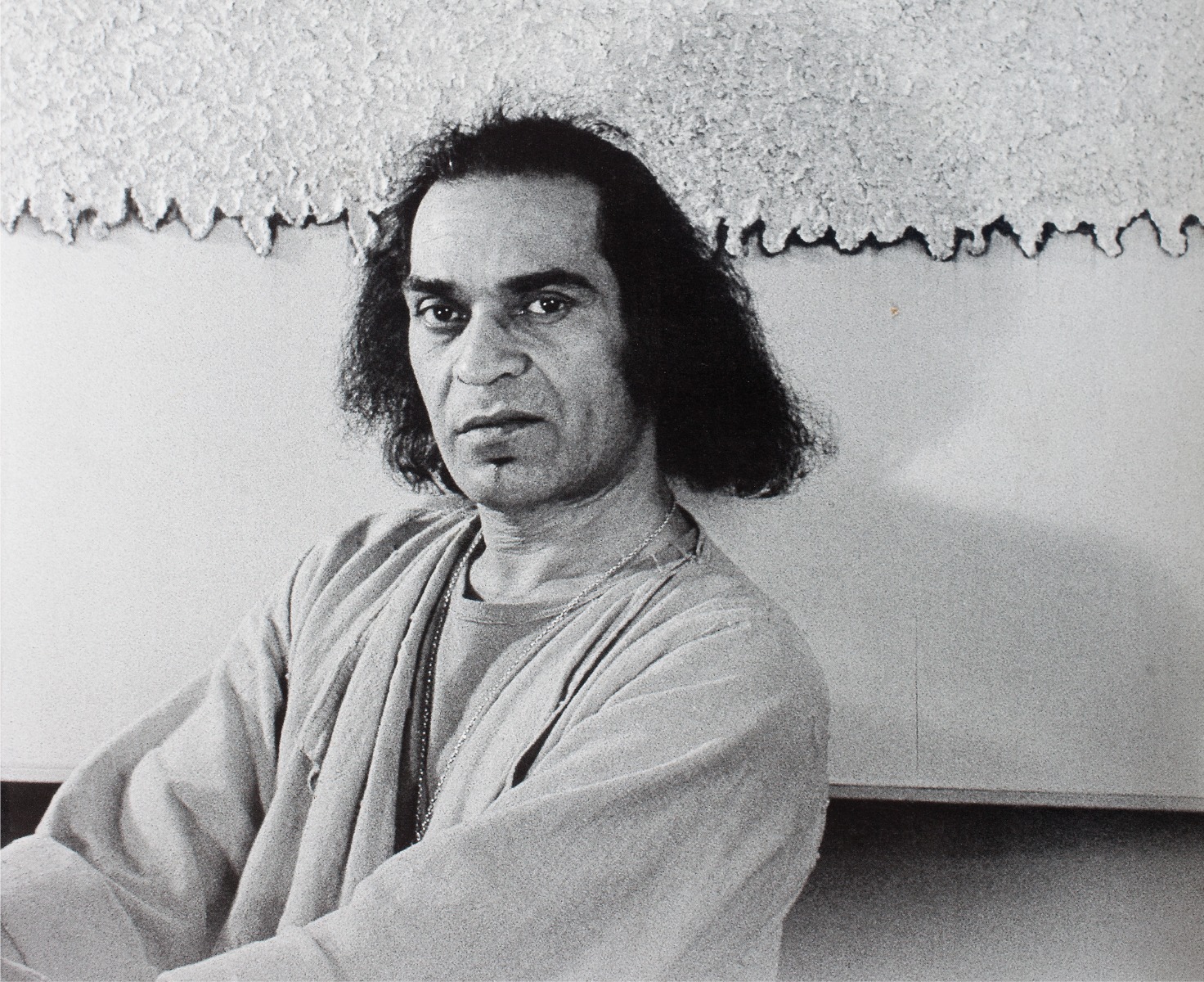
Sohan Qadri
1932 - 2011
Repetitive incisions on paper were part of Sohan Qadri's meditative abstraction, of which his Dot series is a prime example.
He was born in a wealthy farming family in Punjab’s Chachoki village on 2 November 1932. When he was seven, he came across two spiritualists living on the family farm—Bikham Giri, a Bengali Tantric-Vajrayan Yogi, and Ahmed Ali Shah Qadri, a Sufi. Both gurus had a tremendous impact on young Qadri and taught him spiritual ideals through meditation, dance, and music. His association with them heralded a lifelong commitment to spirituality and art.
Escaping from farming, young Qadri first fled to the Himalayas and then made his way into Tibet, staying in monasteries for several months. On being compelled to return, he took up painting. In 1965, Qadri left India and embarked on travels across the globe, eventually settling in Copenhagen, where he painted and taught yoga.
Representation disappeared from Qadri’s visual language early on. In search of transcendence, he created works imbued with tantric symbolism and philosophy, giving rise to his own abstract, modernist vocabulary. His art was minimalist, rendered in vibrant colours, almost an allusion to the northern lights of Scandinavia.
Qadri began his career painting with oils on canvas but from the 1970s onwards, he started working on paper—soaking it, carving it, and covering it in dyes, turning the two-dimensional surface into a three-dimensional medium.
His works are part of prominent collections globally and in India. He passed away in Toronto, Canada, on 2 March 2011.